
Blog
Mini Dachshund Size and Weight: How Big Will Your Dachshund Puppy Get?

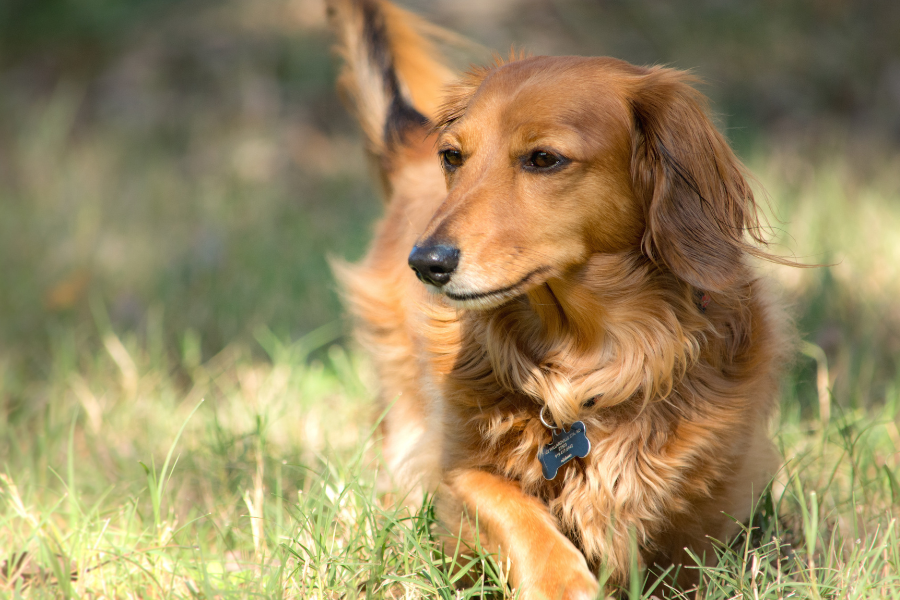
Understanding Mini Dachshund Size can help you know what to expect as your puppy grows from a tiny, playful baby into an adult dog. Mini Dachshunds are small dogs with long bodies, short legs, and big personalities, but their adult size can vary depending on genetics, breeding, diet, and overall health.
If you are bringing home a Mini Dachshund puppy, you may be wondering how tall they will become, how much they should weigh, and when they will reach their full size. You may also wonder if your puppy will stay tiny or grow closer to the larger end of the Mini Dachshund range.
This guide explains Mini Dachshund size and weight in simple terms, including puppy growth stages, adult measurements, factors that affect size, and how to tell if your Dachshund is growing at a healthy rate.
What Is the Size of a Mini Dachshund?
A Mini Dachshund is the smaller size variety of the Dachshund breed. In the United States, Dachshunds are commonly divided into two size categories: Miniature and Standard.
The American Kennel Club generally recognizes Miniature Dachshunds as weighing 11 pounds or less at 12 months of age or older. Standard Dachshunds are typically over 11 pounds, although the breed standard focuses on weight rather than a specific height requirement.
Because Dachshunds have short legs and long bodies, their height can look quite different from their weight. Two Mini Dachshunds may have similar weights but look slightly different in body length, leg length, and overall build.
Mini Dachshund Size at a Glance
| Measurement | Typical Mini Dachshund |
| Adult weight | 11 pounds or less |
| Adult height | About 5 to 7 inches at the shoulder |
| Body type | Long and low |
| Growth period | Most physical growth occurs during the first year |
| Full adult size | Usually reached around 12 months, with some changes continuing afterward |
| Build | Small, compact, muscular |
These numbers are general guidelines. Individual Mini Dachshunds can vary.
How Big Will a Mini Dachshund Puppy Get?
Most Mini Dachshund puppies grow quickly during their first several months. By the time they reach their first birthday, many have reached their adult height and are close to their adult weight.
However, puppy growth is not perfectly predictable. A puppy’s parents are one of the best clues to its eventual size. If both parents are small Mini Dachshunds, the puppy may also remain relatively small. If the parents are larger or near the upper end of the Miniature range, the puppy may grow into a larger Mini Dachshund.
Genetics are important, but they are not the only factor. Nutrition, activity, health, and early development can also affect growth.
Mini Dachshund Puppy Weight Chart
A puppy weight chart can give you a general idea of how your Mini Dachshund may grow. It should not be treated as an exact prediction.
| Age | Approximate Weight Range |
| 8 weeks | 2 to 4 pounds |
| 12 weeks | 3 to 6 pounds |
| 4 months | 4 to 7 pounds |
| 5 months | 5 to 8 pounds |
| 6 months | 6 to 9 pounds |
| 9 months | 7 to 10 pounds |
| 12 months | 8 to 11 pounds |
Some puppies may fall outside these ranges and still develop normally.
The most important thing is not a single number on the scale. Your veterinarian can help determine whether your puppy is growing at an appropriate rate based on body condition, development, breed, and individual needs.
Mini Dachshund Size by Age
Knowing what to expect at different ages can make puppy growth easier to understand.
Mini Dachshund Size at 8 Weeks
At around eight weeks old, a Mini Dachshund is still very small. This is also around the age when many puppies go to their new homes.
An 8-week-old Mini Dachshund may weigh only a few pounds. Their legs are short, their bodies are still developing, and they may look much smaller than they will as adults. Do not expect an 8-week-old puppy to look like a miniature version of a finished adult dog. Puppies go through several changes during their first year.
Mini Dachshund Size at 3 Months
At three months, your puppy will usually be noticeably bigger than it was at eight weeks.
This is an active stage. Your puppy may be running, playing, exploring, and learning basic commands. Growth can seem very fast during this period. You may notice that your puppy appears to gain weight or length almost every few weeks.
Mini Dachshund Size at 6 Months
At six months, many Mini Dachshunds are well on their way to adult size. Your puppy may already have much of its adult body shape, although it can continue filling out and developing muscle.
Some puppies will be closer to their adult weight at this point, while others will continue growing for several more months.
Mini Dachshund Size at 9 Months
By nine months, many Mini Dachshunds are close to their adult height and overall size. Their growth may begin to slow compared with the first six months. However, they can continue developing muscle and body condition. Your Dachshund may also start looking less like a tiny puppy and more like a young adult dog.
Mini Dachshund Size at 12 Months
At around one year old, many Mini Dachshunds have reached their adult size. The number on the scale may still change slightly after 12 months because dogs can continue developing muscle and body condition. However, major growth in height and length is usually mostly complete.
When Does a Mini Dachshund Stop Growing?
Most Mini Dachshunds reach most of their adult size by around 12 months of age. Some may continue to fill out after their first birthday. Their body may become more muscular or mature even if their height does not change much.
Growth can also vary from puppy to puppy. A Mini Dachshund that looks very small at four months may catch up later, while another puppy may reach most of its adult size earlier. This is why puppy size should be viewed as a growth pattern rather than a single measurement.
What Affects Mini Dachshund Size?
Several factors can affect how large your Dachshund becomes.
Genetics
Genetics are one of the biggest factors. A puppy inherits traits from both parents, including body structure, bone size, height, and general build. Looking at the parents can give you useful information about what to expect. Responsible breeders should be able to tell prospective puppy owners about the parents and their sizes.
Nutrition
Good nutrition helps puppies develop strong bones, muscles, and healthy body systems. Puppies should receive food designed for their life stage and individual needs. Overfeeding does not make a puppy healthier or guarantee that it will grow into a larger adult. Too much food can instead lead to excessive weight gain.
Exercise
Mini Dachshunds are small, but they are not lazy dogs. They often enjoy walks, games, training, and exploring. Age-appropriate activity helps puppies build coordination and muscle. Because Dachshunds have a long back and short legs, owners should also be mindful of activities that involve repeated jumping from heights or rough movements.
Health
Illness, parasites, digestive problems, and other health issues can affect puppy growth. Regular veterinary checkups can help identify problems early and make sure your puppy is developing properly.
Mini Dachshund Size vs. Standard Dachshund Size
One of the easiest ways to understand Mini Dachshund size is to compare it with the Standard variety.
| Feature | Mini Dachshund | Standard Dachshund |
| Adult weight | 11 pounds or less | Usually over 11 pounds |
| Height | Generally shorter | Generally taller |
| Body shape | Long and low | Long and low |
| Legs | Short | Short |
| Personality | Active and confident | Active and confident |
| Exercise needs | Regular activity | Regular activity |
Both sizes share many of the same breed characteristics. The biggest difference is overall size and weight. It is also important to remember that a Dachshund’s weight does not tell the entire story. A muscular dog can weigh more than a less muscular dog of a similar height.
How Can You Tell if Your Mini Dachshund Is a Healthy Weight?
Looking at your puppy’s body condition is more useful than focusing only on the number on the scale. A healthy Dachshund should have a visible waist when viewed from above. You should also be able to feel the ribs without seeing them sharply through the coat.
If you cannot easily feel your puppy’s ribs, your puppy may be carrying too much weight. If the ribs, spine, or hip bones are very prominent, your puppy may be too thin. Your veterinarian can assess your puppy’s body condition and help you determine an appropriate feeding plan.
Healthy Weight Signs
| What You Notice | What It May Mean |
| Ribs can be felt but are not strongly visible | Often a healthy body condition |
| Noticeable waist from above | Generally a positive sign |
| Abdomen gently tucks upward | Common healthy body shape |
| Heavy fat covering ribs | May indicate excess weight |
| Very prominent ribs and bones | May indicate your puppy is underweight |
Body shape can vary naturally, so these signs should be considered alongside professional veterinary advice.
Does a Mini Dachshund’s Color Affect Its Size?
Coat color and pattern do not automatically determine whether a Dachshund will be Miniature or Standard. A red Dachshund, black and tan Dachshund, chocolate Dachshund, dapple Dachshund, or another color can be Miniature or Standard depending on its genetics and breeding. Size should be evaluated separately from coat color.
For families choosing a puppy, it is more useful to ask about the puppy’s parents, expected adult size, health history, and growth than to assume that a particular color will produce a certain size.
Do Male and Female Mini Dachshunds Have Different Sizes?
There can be some differences between individual male and female Dachshunds, but sex alone does not determine adult size. A female Mini Dachshund can be larger than a male from another litter, and a male can be smaller than a female.
Genetics and individual body structure are more useful when estimating adult size. If you are choosing a puppy, ask the breeder about the parents and the expected adult size of the specific puppy rather than relying only on whether the puppy is male or female.
How to Estimate Your Mini Dachshund’s Adult Size
There is no perfect formula for predicting adult size.
One useful approach is to look at:
- The puppy’s current weight
- The puppy’s age
- The size of both parents
- The puppy’s growth pattern
- The size of previous puppies from the same parents or bloodline
A breeder with experience raising the same family of Dachshunds may also have a better idea of how their puppies typically mature.
Still, any estimate should be treated as an estimate.
Why Puppy Weight Is Not a Perfect Predictor
Two puppies can weigh the same at four months and end up at different adult weights. One may grow more quickly early on and then slow down. Another may grow steadily over a longer period. This is why it is better to track your puppy’s growth over time instead of trying to predict the final number from one weigh-in.
How Often Should You Weigh a Mini Dachshund Puppy?
During the puppy stage, regular weigh-ins can help you keep track of growth. You can weigh a small puppy using a pet scale or another safe method recommended by your veterinarian. Keeping a simple record can help you notice changes over time.
For example:
| Age | Weight |
| 8 weeks | 3.0 lb |
| 10 weeks | 3.8 lb |
| 12 weeks | 4.6 lb |
| 16 weeks | 5.8 lb |
| 20 weeks | 6.7 lb |
| 24 weeks | 7.5 lb |
The numbers above are only an example. Your puppy may follow a completely different growth pattern. What matters is that your puppy is developing appropriately and maintaining good body condition.
Can a Mini Dachshund Become Overweight?
Yes. Mini Dachshunds can gain excess weight just like any other dog. Because their legs are short and their backs are long, carrying extra weight can put additional strain on their body.
Portion control, appropriate food, regular activity, and routine veterinary care can all help maintain a healthy weight. Treats should also be included when considering your puppy’s total daily food intake.
Avoid intentionally overfeeding a puppy because you want it to become bigger. Healthy growth is the goal, not maximum growth.
Mini Dachshund Size and Back Health
A Dachshund’s unique body shape is one of the reasons owners need to pay attention to weight and physical activity. Their long back and short legs make them different from many other small breeds.
Keeping your Dachshund at a healthy weight is an important part of caring for their overall mobility and comfort. You can also reduce unnecessary jumping by using ramps or steps designed for dogs where appropriate. Teach your puppy safe ways to get on and off furniture rather than allowing repeated high jumps.
Your veterinarian can provide advice based on your individual dog’s age, health, and lifestyle.
What Size Crate Does a Mini Dachshund Need?
A Mini Dachshund needs a crate that allows the dog to stand up, turn around, lie down, and stretch comfortably. A crate that is too large may not provide the cozy space many dogs prefer for sleeping and house training, while one that is too small can be uncomfortable.
Because puppies grow quickly, some owners choose an adjustable crate with a divider.
Choosing a Crate
| Puppy Stage | What to Look For |
| Young puppy | Enough space to stand and turn comfortably |
| Growing puppy | Adjustable crate with divider |
| Adult Mini Dachshund | Comfortable space based on final body size |
Measure your individual Dachshund rather than buying based only on a breed label.
Frequently Asked Questions About Mini Dachshund Size
How much should a Mini Dachshund weigh?
An adult Mini Dachshund is generally expected to weigh 11 pounds or less under the AKC size classification. Individual dogs may vary, so body condition and overall health are also important.
How big does a Mini Dachshund get?
Most adult Mini Dachshunds remain small and typically weigh 11 pounds or less. Their height is often around 5 to 7 inches at the shoulder, although individual dogs can vary.
At what age is a Mini Dachshund fully grown?
Many Mini Dachshunds reach most of their adult size by about 12 months. Some may continue to fill out and gain muscle after their first birthday.
How big will my Mini Dachshund puppy get?
The best clues are your puppy’s parents, current growth pattern, genetics, and overall health. A puppy’s weight at one specific age cannot guarantee its final adult size.
Is a 12-pound Dachshund a Mini?
Under the AKC’s Miniature Dachshund classification, an adult Dachshund weighing more than 11 pounds would not fall within the Miniature weight category. However, body condition and individual structure should also be considered.
Can Mini Dachshunds be under 8 pounds?
Yes. Some Mini Dachshunds can be quite small, especially if they come from smaller lines. However, extremely small size should not be pursued at the expense of health.
Do Mini Dachshunds stay small?
Yes. Mini Dachshunds are bred to be the smaller size variety of Dachshund. Most remain small throughout adulthood, although their exact weight and body proportions can vary.
Do Mini Dachshunds grow after one year?
Most major growth is complete around one year, but some dogs may continue to mature and develop muscle after 12 months.
Mini Dachshund Growth: What Owners Should Remember
There is no single number that describes every Mini Dachshund.
Your puppy may grow faster or slower than another puppy of the same age. It may also look different depending on body length, bone structure, muscle, and coat. Instead of worrying about whether your puppy matches an exact chart, focus on steady development and healthy body condition.
Keep track of your puppy’s weight, feed an appropriate diet, provide safe exercise, and schedule regular veterinary checkups. If your puppy suddenly stops gaining weight, loses weight, has repeated digestive problems, seems unusually tired, or shows other concerning symptoms, contact your veterinarian.
Final Thoughts on Mini Dachshund Size
Knowing what to expect from your puppy’s growth can make raising a Dachshund easier and less stressful. Most Mini Dachshunds remain small, with adult dogs generally weighing 11 pounds or less under the AKC classification.
Your puppy’s parents can provide valuable clues about its future size, but genetics do not provide an exact prediction. Growth rate, nutrition, health, activity, and body structure all matter.
The goal should not be to make your Dachshund as small as possible. The goal is a healthy, active dog with an appropriate body condition.
Whether you are researching puppies before bringing one home or watching your Dachshund grow through its first year, understanding Mini Dachshund Size can help you make better decisions about food, exercise, supplies, and everyday care. With proper nutrition, regular veterinary care, safe activity, and plenty of love, your Mini Dachshund can grow into a happy and healthy companion while staying true to the small but lively breed you chose.