Blog
Dapple Dachshund Puppies: Colors, Patterns, Genetics, and What Buyers Should Know

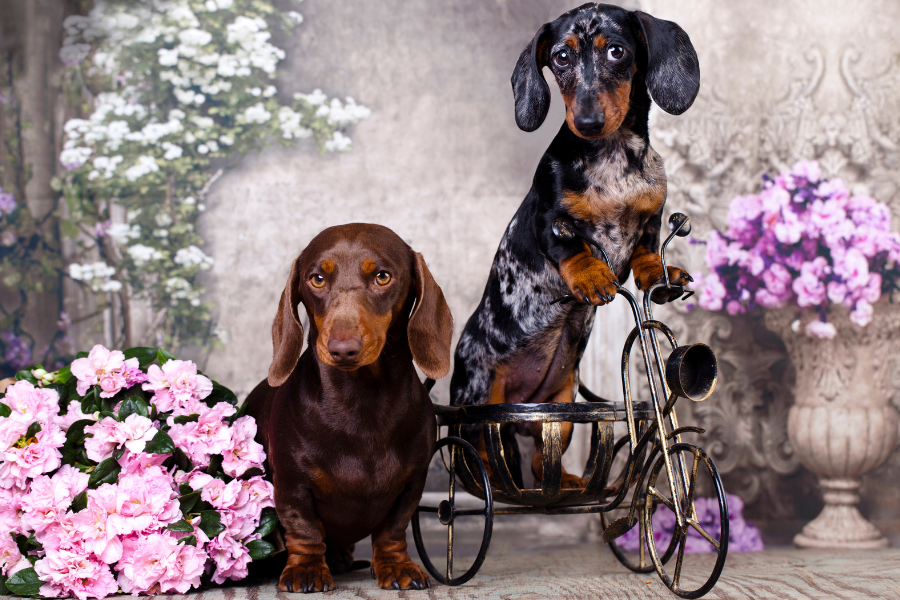
Dapple Dachshund Puppies are known for their eye-catching coats, with lighter patches mixed into a darker base color to create a unique marbled or mottled look. The dapple pattern is not a separate breed or a simple color. It is a genetic pattern caused by the merle gene, which changes how pigment appears in parts of the coat.
For families looking for a Dachshund puppy, dapples can be especially appealing because no two patterns look exactly alike. Some puppies have bold patches, while others have a softer, lightly mottled appearance. Some may also have partially or completely blue eyes, which can occur with the dapple pattern.
However, there is more to choosing a dapple puppy than simply picking the coat you like best. Buyers should understand how the pattern is inherited, how it differs from piebald, why two dapple Dachshunds should not be bred together, and what questions to ask a breeder.
What Is a Dapple Dachshund?
A dapple Dachshund is a Dachshund with the merle coat pattern. The Dachshund Club of America uses “dapple” for this pattern, while genetics resources generally use the term “merle.” The pattern creates areas of diluted pigment mixed with areas of darker, normal pigment.
The result can look like irregular spots, patches, streaks, or swirls spread across the dog’s coat. The exact appearance depends on the puppy’s base color and other genes that affect pigmentation.
Dapple is a pattern, not a base color.
For example, a puppy may be:
- Black and tan dapple
- Chocolate and tan dapple
- Red dapple
- Longhaired dapple
- Smooth-haired dapple
- Wirehaired dapple
The dapple gene changes the appearance of the underlying color rather than replacing it with one specific color. This is why two Dapple Dachshund Puppies can look very different even when they inherit the same basic dapple pattern.
What Does a Dapple Dachshund Look Like?
The easiest way to recognize a dapple is to look for irregular areas of lighter and darker pigment.
On a black-and-tan Dachshund, for example, the black areas may appear diluted into gray or silver-looking patches. The tan markings can remain visible around the face, chest, legs, and other areas.
The Dachshund Club of America describes dapple as lighter-colored areas contrasting with darker areas of the base color. It also notes that the base color may be one of the accepted Dachshund colors.
Some dapples have very obvious patterns, while others are subtle.
A puppy can also have:
- Blue or partially blue eyes
- A dark nose
- Tan markings
- A small amount of white on the chest
- Large or small areas of diluted pigment
- A pattern that becomes less obvious as the puppy matures
A puppy’s appearance can also change as its adult coat develops. This is one reason buyers should not judge a puppy’s future appearance based only on a single photograph.
Dapple Dachshund Colors
Dapple can appear over different Dachshund base colors. The base color is important because it affects how the dapple pattern looks.
Black and Tan Dapple
Black and tan dapple is one of the most recognizable combinations. The puppy has black and tan coloring, with the black areas affected by the dapple pattern. The black portions may contain lighter gray or silver-colored areas.
This is sometimes casually called a “silver dapple,” but the Dachshund Club of America notes that the proper description is generally the base color followed by the dapple pattern, such as black and tan dapple.
Chocolate and Tan Dapple
Chocolate and tan dapples have brown rather than black as the main dark pigment. The dapple pattern creates lighter areas within the chocolate coat. Depending on the puppy’s genetics, the result can range from strong contrast to a much softer mottled appearance.
Red Dapple
Red dapple Dachshunds can be more difficult to identify. The dapple pattern may be subtle on red coats, and the visible pattern can become less obvious as the puppy grows. The Dachshund Club of America specifically notes that red dapples can sometimes be difficult to recognize visually and that the pattern may fade in appearance. This is particularly important for breeders because a dog that visually appears solid red may still carry the merle variant.
Dapple With Different Coat Types
Dapple is not limited to smooth-coated Dachshunds.
The pattern can occur in:
- Smooth-haired Dachshunds
- Longhaired Dachshunds
- Wirehaired Dachshunds
The coat type and dapple pattern are controlled by different genetic factors. A longhaired dapple and a smooth-haired dapple can therefore have very similar color patterns while having very different coat textures.
How Does the Dapple Gene Work?
The genetics behind dapple can seem complicated, but the basic idea is fairly simple. The dapple pattern is caused by a variant involving the PMEL gene. Veterinary Genetics Laboratory resources describe merle as an incompletely dominant coat pattern that creates irregular patches of diluted pigment and solid pigment.
Think of it as a pigment pattern modifier. The gene does not simply tell the puppy, “be gray.” Instead, it changes the distribution of pigment in parts of the coat.
That creates the classic dapple appearance. Because merle inheritance has some unusual genetic features, testing can be especially useful. The merle variant contains a genetically unstable poly-A tail, which can expand or contract. This can result in differences between parent and offspring genotypes and can also contribute to different expressions of the pattern. This is one reason experienced breeders should not rely only on looking at a dog’s coat.
Is Dapple Dominant?
Merle is described as an incompletely dominant pattern. A dog with one copy can express the dapple pattern, while inheriting two copies creates a different genetic situation that breeders need to avoid. In simple terms, if a dapple Dachshund is bred to a non-dapple Dachshund, the puppies have a much more straightforward genetic setup than when two dapple Dachshunds are bred together.
A simplified example looks like this:
| Parent Combination | Potential Concern |
| Non-dapple × Non-dapple | No dapple puppies expected |
| Dapple × Non-dapple | Dapple puppies may occur |
| Dapple × Dapple | Double-dapple puppies may occur |
| Red-looking dog with uncertain merle status × Dapple | Genetic testing may be important |
The exact outcome depends on the parents’ genetics, and visual appearance alone does not always tell the whole story.
What Is a Double Dapple Dachshund?
A double dapple is a Dachshund that inherits the dapple or merle variant from both parents. This is why responsible Dachshund breeding pays close attention to the genetics of both parents.
The concern is not simply that double dapples have a different coat pattern. The combination can be associated with serious developmental problems involving the eyes and hearing. The Dachshund Club of America identifies concerns including deafness, reduced eye size, and missing eyes in double dapples.
Veterinary Genetics Laboratory information on merle also notes that dogs with merle genetics may have auditory and ophthalmologic defects, particularly when two copies are inherited. For this reason, breeders should not breed two dapple Dachshunds together.
Why Two Dapple Dachshunds Should Not Be Bred Together
This is one of the most important things buyers should understand. Two dapple Dachshunds can each be healthy dogs. The concern comes from combining their dapple genetics in the same litter.
When two dapple parents are bred together, some puppies may inherit a copy of the merle variant from both parents. These puppies are commonly called double dapples. Double-dapple puppies can have extensive white areas and may be at greater risk of hearing and eye abnormalities. The Dachshund Club of America specifically warns about this combination. A responsible breeding program therefore needs to consider more than what the parents look like.
Genetic records and appropriate testing can help breeders make safer breeding decisions.
Can a Red Dachshund Hide the Dapple Pattern?
Yes, the pattern can be difficult to see on some red Dachshunds. This is especially important because a dog that does not obviously look dapple may still carry the relevant merle variant.
The Dachshund Club of America explains that red dapples can be difficult to identify and that the dapple pattern may visually fade as the dog grows. That means a breeder should not assume that a Dachshund is genetically non-dapple simply because the coat looks solid.
This is one reason DNA testing can be useful when breeding dogs where the merle status is uncertain.
Dapple vs. Piebald Dachshund
Dapple and piebald are two different patterns. They can sometimes be confused because both can create unusual-looking coats, but the genetics and appearance are not the same.
A dapple has irregular areas of diluted pigment within the colored coat. Piebald has clearly defined areas of white spotting over the base color. The Dachshund Club of America describes these as separate patterns.
Here is a simple comparison:
| Feature | Dapple Dachshund | Piebald Dachshund |
| Main pattern | Mottled or marbled pigment | White spotting |
| Genetic basis | Merle | White spotting genetics |
| Blue eyes | Can occur | Not characteristic of piebald |
| Light patches | Diluted pigment | White areas |
| Pattern appearance | Irregular mottling | More clearly defined white patches |
| Breeding concern | Two dapples can produce double dapples | Different genetic considerations |
The key point is that a light-colored patch is not automatically white. Some dapple areas can be very pale, especially in photographs.
Dapple vs. Double Dapple
Dapple and double dapple should never be treated as interchangeable terms. A typical dapple has one copy of the merle variant and can have a healthy life like other Dachshunds.
A double dapple inherits the relevant variant from both parents and can have an increased risk of serious eye and hearing problems. Visual identification can also be difficult in some puppies.
For buyers, this means asking about the parents is just as important as looking at the puppy.
Are Dapple Dachshund Puppies Healthy?
A dapple pattern by itself does not mean that a puppy is unhealthy. A responsibly bred single-dapple Dachshund can be an active, affectionate companion. However, the genetics behind the pattern make responsible breeding particularly important.
Buyers should also remember that Dachshunds have health considerations that are not specific to dapple coloring. Their long backs and short legs are part of the breed’s distinctive structure, and Dachshunds can be prone to spinal problems.
The Veterinary Genetics Laboratory notes that the genetic variant associated with chondrodystrophy is common in Dachshunds and affects skeletal development, including structures involved in the limbs and spine. So when evaluating Dapple Dachshund Puppies, buyers should look beyond coat color.
A responsible breeder should care about:
- Parent health
- Genetic testing
- Appropriate breeding combinations
- Puppy development
- Veterinary care
- Temperament
- Socialization
- Breed-specific health risks
What Genetic Tests Should Buyers Ask About?
There is no single DNA test that answers every question about a Dachshund puppy. Instead, genetic testing can be used for different traits and inherited conditions.
The UC Davis Veterinary Genetics Laboratory lists Dachshund testing options that include progressive retinal atrophy conditions, coat color genetics, parent verification, coat length, and merle testing.
For a puppy buyer, useful questions include:
Have the parents been DNA tested?
Ask which tests were performed and what the results were.
Has the dapple status been confirmed genetically when necessary?
This can be especially useful with red Dachshunds or dogs whose patterns are difficult to identify visually.
Can I see the parents’ health and genetic records?
A trustworthy breeder should be comfortable discussing the health testing they use.
What testing is recommended for this breeding pair?
The answer may vary depending on the parents’ genetics, family history, and breeding goals.
What Should Buyers Ask a Dapple Dachshund Breeder?
When considering Dapple Dachshund Puppies, do not be afraid to ask detailed questions.
Good questions include:
- Is the puppy a single dapple?
- What are the colors and patterns of both parents?
- Are both parents DNA tested?
- Has either parent been tested for merle when visual identification is uncertain?
- Have the parents been screened for relevant inherited conditions?
- Can I see the parents’ health records?
- Has the puppy received a veterinary examination?
- What vaccinations and deworming has the puppy received?
- How are the puppies socialized?
- What support do you provide after the puppy goes home?
A breeder should be willing to explain the genetics behind the litter instead of simply describing a puppy as “rare,” “unique,” or “special.”
Are Dapple Dachshund Puppies Rare?
Dapple Dachshund Puppies can be less common than some traditional Dachshund color and pattern combinations, but buyers should be careful with the word “rare.” A rare-looking coat does not automatically mean a puppy is healthier, more valuable, or better suited as a pet.
The dapple pattern is a recognized Dachshund pattern. The Dachshund Club of America breed standard specifically describes dappled Dachshunds and recognizes the pattern. A breeder should prioritize responsible health and genetic practices rather than creating unusual combinations simply because they attract attention.
Do Dapple Dachshunds Have Blue Eyes?
Some dapple Dachshunds can have blue or partially blue eyes. The Dachshund Club of America states that partial or wholly blue eyes can occur in dappled Dachshunds.
This can be one of the features that makes Dapple Dachshund Puppies especially eye-catching. However, blue eyes should not be used as the only way to identify a dapple. Coat pattern, parent genetics, and DNA testing can provide much more useful information.
It is also important to separate naturally occurring eye color associated with a dapple pattern from eye abnormalities associated with double-dapple genetics.
Does Dapple Change a Dachshund’s Personality?
The dapple pattern itself is a coat pattern. It should not be used as a shortcut for predicting a puppy’s personality. Temperament is influenced by genetics, early development, socialization, environment, training, and individual personality.
A black and tan dapple and a red dapple can have completely different personalities even though they share the same pattern. When choosing Dapple Dachshund Puppies, look at the puppy as an individual.
A good breeder can also help match a puppy’s temperament and energy level with the buyer’s lifestyle.
What Should You Look for in a Dapple Puppy?
When meeting a litter, look at more than the coat. A healthy puppy should receive appropriate veterinary care and should be growing and developing as expected.
Buyers should ask about:
- Veterinary examinations
- Vaccinations
- Deworming
- Feeding
- Weight and growth
- Socialization
- Parent health
- Genetic testing
- Puppy records
- Contract and health guarantee
You should also observe how the puppy behaves. Is the puppy curious? Does it interact with people? Does it recover reasonably well from new sounds and experiences? Does it appear comfortable and active? There is no single personality that every Dachshund puppy should have, but a breeder should be able to explain how the litter has been raised and socialized.
How Much Grooming Does a Dapple Dachshund Need?
Dapple does not determine grooming needs. Coat type does. Smooth Dachshunds generally need simple grooming and regular brushing. Longhaired Dachshunds usually need more brushing to prevent tangles and keep the coat neat.
Wirehaired Dachshunds have a different coat texture and may need additional grooming techniques. The dapple pattern itself does not require special grooming products. Regular nail care, dental care, bathing as needed, ear checks, and routine veterinary care are more important than the puppy’s coat pattern.
Do Dapple Dachshunds Need Special Care?
A single-dapple Dachshund does not automatically require a special lifestyle simply because of its coat. However, every Dachshund owner should understand the breed’s body structure.
Because Dachshunds have long backs and short legs, owners should take reasonable steps to support healthy movement and avoid unnecessary strain. Keeping a healthy body weight is important. Regular exercise is also important, but activities should be appropriate for the individual dog.
Your veterinarian can provide guidance based on your Dachshund’s age, weight, health, and activity level.
How Genetics Affect Dapple Dachshund Puppies
The biggest lesson for buyers is that coat color is not just about appearance. Genes influence the colors and patterns a puppy inherits.
The UC Davis Veterinary Genetics Laboratory explains that several genes work together to create canine coat color and pattern. These include genes involved in black and red pigment, brown pigment, dilution, white spotting, and merle.
This means a puppy’s final appearance is the result of multiple genetic factors.
For example, a puppy’s dapple pattern may be combined with genes influencing:
- Black versus brown pigment
- Red or cream coloring
- Coat length
- White spotting
- Other coat characteristics
This is why two puppies from the same litter can have very different appearances.
Why Responsible Breeding Matters
Responsible breeding is especially important with Dapple Dachshund Puppies because the merle gene requires careful planning. The goal should not simply be to produce the most dramatic-looking pattern.
Instead, breeders should know the genetics of the parents and avoid pairings that can produce double-dapple puppies. They should also consider the broader health of the parents and puppies.
A beautiful coat is only one part of a healthy puppy. Good breeding decisions consider health, structure, temperament, genetic risks, and long-term welfare.
Dapple Dachshund Puppy Buyer Checklist
Before bringing home a puppy, use this quick checklist:
Before You Choose
- Learn the difference between dapple and piebald.
- Ask whether the puppy is a single dapple.
- Ask about both parents.
- Ask for genetic testing information.
- Ask about breed-specific health screening.
- Visit the breeder when possible.
- Meet the puppy’s mother when possible.
- Ask how the puppies are socialized.
Before You Take the Puppy Home
- Review veterinary records.
- Confirm vaccination and deworming information.
- Ask what food the puppy is eating.
- Get feeding instructions.
- Review the contract.
- Understand the health guarantee.
- Ask about future veterinary care.
- Make sure you understand how to protect a Dachshund’s back and joints.
These steps can help buyers make a more informed choice without focusing only on coat color.
Frequently Asked Questions About Dapple Dachshund Puppies
What is a dapple Dachshund?
A dapple Dachshund has the merle coat pattern, which creates irregular areas of diluted and normal pigment. The pattern can appear over different base colors.
Are dapple Dachshunds healthy?
A single-dapple Dachshund can be healthy. However, breeding two dapples can produce double-dapple puppies, which have an increased risk of hearing and eye abnormalities.
Can dapple Dachshunds have blue eyes?
Yes. Blue or partially blue eyes can occur in dapple Dachshunds.
What is a double dapple?
A double dapple inherits the dapple or merle variant from both parents. This combination is associated with increased risks of problems such as deafness and eye abnormalities.
Can a red Dachshund be a dapple?
Yes. Red dapples can be difficult to identify visually because the pattern may be subtle or fade in appearance as the dog matures.
Is dapple the same as piebald?
No. Dapple creates areas of diluted pigment, while piebald produces clearly defined white spotting. They are genetically different patterns.
Should two dapple Dachshunds be bred together?
No. Breeding two dapple Dachshunds can produce double-dapple puppies and increases the risk of serious eye and hearing abnormalities.
Do dapple Dachshunds need special grooming?
Not because of the dapple pattern. Grooming needs are mainly determined by whether the Dachshund has a smooth, long, or wire coat.
What should I ask a breeder?
Ask about the parents’ genetics, health testing, dapple status, veterinary care, socialization, and breeding practices. Buyers should be particularly interested in whether the breeder avoids dapple-to-dapple pairings.
Final Thoughts on Choosing Dapple Dachshund Puppies
Dapple Dachshund Puppies stand out because their coats can have beautiful, one-of-a-kind patterns. From black and tan dapple to chocolate and tan dapple and subtle red dapple, each puppy can have its own look. But the most important part of choosing a puppy is not how unusual the coat appears. Understanding dapple genetics, knowing the difference between dapple and double dapple, and asking thoughtful questions about the parents can help buyers make a responsible choice.
A well-bred Dachshund should be valued for more than its color. Health, temperament, responsible genetics, proper veterinary care, and good early socialization all matter. When you are looking at Dapple Dachshund Puppies, take time to learn what is behind the beautiful pattern. A knowledgeable breeder should be happy to explain the parents’ genetics, health testing, and how the litter was raised. The right Dapple Dachshund Puppies are not simply beautiful to look at. They are puppies raised with careful attention to health, genetics, development, and lifelong well-being.